A Terrapsychological Glance at Bolinas, California
The vibes are too high
They’re Empire State high
I’m a ground hole watcher
Out my Bolinas window
–Joanne Kyger, Trip Out & Fall Back
Most American towns and cities have a motto. That of San Diego, the militarily founded city of my birth, is “Always Vigilant.” What is the motto of Bolinas? It’s hidden.
Bolinas is a small Northern Californian town of 5.8 square miles and a population of 1,195 as of 2025. Locals work persistently to keep both numbers from rising. In fact, when new road signs are posted, they are liable to be stolen. There is no city hall or chamber of commerce. Even the post office disappeared for two years, finally returning for the fall of 2025. If you wanted to send or receive mail, you had to drive to a semi-nearby town.
Bolinas is guarded on three sides by water—Bolinas Bay, a lagoon, and the sea—and surrounded by nature sanctuaries. The town also perches west of the San Andreas Fault on the edge of the Pacific Plate moving inexorably northward one inch per year as it separates from the North American Plate. Geologically as well as culturally, the town will go its own way.The trope is that Bolinas remains relatively secluded because citizens cooperate to keep it that way. They do. They understand what happens when the developers roll in. Even so, the recurring motif of hiddenness begins with the land itself. The nature of the place is to remain to one side as its own kind of margin.
What is true of the place is true as well of its culture, as we find in all places and all cultures. We’ve forgotten this relationship, lost in our myopic focus on ourselves.
A Terrapsychological Reminder
Research on how nature and place influence us tends to assume they are separate. It’s a dualistic bias with more than four centuries of human exceptionalism behind it. The oppositional thinking involved is even older; Aristotle would have recognized it. Terrapsychology, a body of ideas and practices producing story-based inquiries since 2003, assumes differently: We are profoundly emplaced, always. We start from here, as nature self-reflecting.
We climb mountain peaks to peek through a higher perspective, walk into deserts to find purification, enter the forest to regain our lost wildness, swim to get back into flow.
Congested roads parallel congested moods, interactions, even heavy dreams. Open vistas open heart and mind and lift our wary senses.
These are not connections of simple causality as favored by a physical science model that excludes subjectivity while splitting cause from effect, mind from nature, and self from world. Intricate ties between people and places are best followed across bridges of symbol, motif, image, metaphor, and thematic parallel, tools more at home in the humanities. Cartographers can measure contours, but poets and artists reveal subtler intimacies.
The terrapsychological move is simple, but important: How does what is here—the sea, the estuary, the elements—show up in us?
Names and Deeper Stories
Every name bears a story.
I recently told a new friend that his first name, John, reaches back past its Christian meanings (which are important) to the Mesopotamian water god Oannes, who gave the gifts of civilization to human beings. He was part man and part fish. My friend can relate to this image of hybridity. He has lived near the sea and works to protect the natural world.My first name, Craig, also refers to an aspect of nature—“outcropping of stone”—and does frequent duty as a place name in Scotland: Achnacraig, Beldcraig, Craig Arthbry, and so on. I grew up in California, but under high stony hills. Rock ‘n’ roll.
Just as we disconnect inner self and outer world, we split names from any deeper meaning behind their presence. Humans in the driver’s seat again: we call a thing what we please, period. More awaits behind naming, though, than a simple conscious choice.
Place names reflect this. The Indigenous name of the Los Angeles Basin was Tovaangar, which means “the world.” Over millions of years, the Basin had rotated upward from the depths of the Pacific like a rising stage. Long before Hollywood, Native Californians met there to seek visions and enact rituals.
Incoming colonizers from Spain bestowed a long name that invoked Angels, messenger bringers of dazzling visions. The angels were on stage there long before the Spanish missionaries came. During WW II, the angels transformed into bombers built in local aircraft factories. Today the messengers enliven our screens. The world of the Basin has staged many changes down the centuries, but certain themes persist.
A vital terrapsychological difference between dwellers like the original ones and later inhabitants is one of consciousness. The dwellers understood the land and its features to be a presence to work with creatively, ritually, and spiritually. The settlers ignored what they rolled into and were unconsciously possessed by recurrent themes, reenacting them unknowingly decade after decade. Even paving over most of the city could not silence its powerful influence; at best, asphalt degraded the message into a symptomatic one as crushed and tacky angels turned demonic.
Like understanding what unfolds on the stage, the question isn’t about evidence or proof. It’s about what images glitter and reach out to us repeatedly in stories rising continually from Los Angeles, the former Bay of Smokes. The significance is in how names hold meanings that bind us to the land. We ignore them at our peril; for as Rilke pointed out, every angel is dangerous.
The wave-like name “Bolinas” probably derives from a lost Coast Miwok word. They were the original inhabitants. By the time Rancho Las Baulinas was formed in 1846, the word in Spanish meant “bowline,” a sailor’s knot with a loop like that of the Bolinas Lagoon and its surroundings. The word also means a line used for sounding the depths.
Navegar de bolina means to sail close to the wind.
This thematics of knots and edges carries over to nearby Kent Island, whose name refers to “corner land” or “edge.” Bolinas sits in an estuary, a fecund ecological edge place where waters and species of different kinds meet.It’s no surprise, then, at least thematically, that the edgy water-ringed town of limited access contains more than forty dead ends, some with a profusion of signage, and many more dead-end roads surrounding it. On my first visit, I also saw the opposite: what looked like sign faces left blank, including squarish stones cut to bear lettering that never arrived. Most of the roads in town are unpaved, unusual for California. Hidden, unavailable, no parking, do not stop. The local equestrian center is named Vanishing Point Ranch. C. G. Jung would call this place highly introverted.
Where do these themes come from? Are they imported? Do human invent them? Our languages describe them, but they come from the land, not from us.
However, tales deeper than hiddenness, loops, and edges emanate from here.
Place and Myth
When I first saw an image of flashing clouds wreathing Mt. Olympus, I understood why the ancient Greeks gazed up and saw the abode of lightning-hurling Zeus. View the labyrinthine limestone sea caves a few miles away, and underworldly Hades lurking in dark depths might come to mind. The ruins of the Temple of Poseidon stare down at his island-filled sea, usually calm, sometimes tempestuous. How jealous he must have felt to behold the rock-topping Parthenon built to honor the armored goddess who gave her name, not his, to Athens.
Because we can read myths (which are sacred tales, not primitive explanations) in books or online, we forget they were first dreamed up and told in some specific place.
Originally, all myths are “nature myths” inasmuch as the tellers live among animate presences. These powers and influences work their way into the myths, even co-author them. (On a camping trip near Harbin Hot Springs, I dreamed that spirits of the land were teaching me a new way to pray.)
The Coast Miwoks of earlier days never saw a map of what we now call Marin County, which, if you study the terrain, might reveal the profile of at least two coyote faces: one staring west, with ears reaching up to Tomales Point, Abbotts Lagoon for an eye, Drake’s Estero for a mouth, Point Reyes for the tip of his long nose, and Bolinas Lagoon for his ever-hungry belly; then (turning the map clockwise) the other face pointing southeast, with Bolinas Lagoon as an eye, a Golden Gate snout (with a Rodeo Lake nostril), and Richardson’s Bay a toothy mouth about to eat Angel Island.
Nevertheless, even without an aerial view, the original dwellers knew Marin to be Coyote’s place. What remain of their stories tell of how, with help from deep-diving
Turtle, Coyote created the world, bringing it forth from an all-encompassing sea. Today, coyotes patrol the hills of Marin, where the San Andreas Fault runs under Bolinas Lagoon, the Olema Valley, and Tomales Bay, forming the back of Coyote’s westward-facing head. The western Coyote is headed north, pulling away from the other. Thewhole of Marin is tilted oddly northwest-southeast, a region of heights and depths, affluent San Rafael paradises of healing and San Quentin’s death row, and towns named for saints near Sleepy Hollow suburb, with Interstate 101 tracing the eastern Coyote’s digestive tract.
Myth, then, isn’t just made up by inquisitive humans. It partakes of where it is first imagined and told. The presences which haunt a place leak into the human imagination and brew strangely storied personifications that echo the surround: nourishing Isis in Egypt, volcanic Pele in Hawaii, white-garbed Mt. Fuji guiding lost strangers, frost and fire giants in the eruptive north, green Papa Bois and Mama Wata in the tropical south.
Terrapsychology has studied many examples of this unacknowledged (in the Global North) co-creative mythic patterning.
Coyote is certainly abroad in this breezy region, howling at night, harassing dogs, hunting harbor seal pups, and even darting wildly at cars on Highway 1 after presumably eating wild hallucinogenic mushrooms.
Along with Coyote, another storied presence turns up again and again here, not only around Bolinas, but in town.
Goddess of Altar and Hearth
Although the deities and spirits inhabiting folklore—including myth—are specific to place and culture, many are archetypally ubiquitous. Regionally, we glimpse Coyote,
who pops up in Native American tales throughout the Southwest, each time in local garb.
Archetypally, Coyote is a Trickster. This is not just semantics. Trickster tales circle the world: tales of Coyote, Baubo, Iktome, Rabbit, Eshu, Hermes, Susanoo, Ananse, Loki, and thousands of other iterations.
These mythic figures give the more general and universal archetype a culturally specific face. Here are a few other examples of what I’ve collected over the years:
Archetype of Erotic Love and Beauty: Alilat, Anaisa Pye, Anahita, Apostrophia, Aphrodite, Asherah, Astarte, Astghik, Atargatis, Branwen, Dahud-Ahes, Enya, Freya, Genetyllis, Hathor, Inanna, Ishtar, Kishijoten, Kythereia, Lada, Lakshmi, Lan Caihe, Medb/Maive, Ninlil, Oshun, Pelagia, Phra Naret, Qetesh, Quetzalpetlatl, Rati, Sauska, Sonhwa, Tlatzolteotl, Turan, Vanadis, Venus, Xochiquetzal, Yang Asha, Yao Ji.
Divine Artisan: Akmon, Amatsumara, Avagdu, Cecht, Cinyras, Credenus, Creidhne, Culann, Daedalus, Feosta, Goibniu, Gofannon, Hephaestos / Aitnaios, Hiruko,
Illmarinen, Kagutsuchi, Kelmis, Kurd-ala-Wargon, Luchtaine, Palamaon, Phoroneus, Ptah, Rushou, Sethlans, Shaohao, St. Joseph, Sungjosin, Svarog, Teljavel, Terah,
Visvakarman, Vulcan, Wayland, Youchaosi, Yu, Zuarasici.Wisdom: Amaterasu, Aruru, Ástse Estsán (First Woman), Ataensic (Sky Woman), Athena, Au Co, Belisama, Brigid (goddess), Buto, Chandi, Cihuacoatl, Durga, Eve (Gnostic), Fatima, Gayatri, Himiko, Hutash, Kali, Kannon, Luonnatar, Marcia Proba, Mary Magdalene, Mawu, Mazu, Metis, Minerva, Neith, Nintu, Nisaba, Nuwa, Nzambi, Oyontsetseg, Pimiku, Princess Bari, Pronoia, Saraswati, Seshat, Sophia, Star Woman, Sulis, Taloden, Tanit, Tara, Ua Zit, Wadjet, White Buffalo Woman, Yemaya, Zhinü.
I keep my own lists because Jungians, who study archetypes as primal figures and motifs found everywhere, tend to include Eurocentric figures like the supposed King and Queen archetypes. My acid test for an archetype is whether it appears in the natural world. Take the Hero, or, to ungender it, the Heroic. I can see this archetype in animals, insects, trees, and even weeds, which ride into bare ground, stir things up, dig up hidden nutrients, and ride out again, leaving more mature ecosystems to follow in their wake.
Weeds are hardy, promiscuous, often spiky to the touch, and difficult to eradicate.
Typical heroes.
In any case, the archetype that concerns us here is Hearth, whose personifications across cultures include Agnayi, Aspelenie, Ayaba, Chantico, Dimste, the Domovoi, Esta, Fuchi, Hestia, Hettsui-No-Kami, Hinukan, Jowangshin, Kamuy Fuchi, Mara, Ninmar, Panike, Rhea Saule, Silvia, St. Brigid, Tabiti, Vesta. Another word or image for this archetype might be Altar.
Which Coast Miwok deity expresses this archetype might have been lost during colonization. Normally, knowing such a deity would be a good check on whether what we sense is really there. Wisdom goddess imagery abounds in Santa Barbara, for example, named for wise St. Barbara, who descended from on high to be with the people below. Long before then, the wise creator goddess Hutash led the Chumash on a rainbow bridge from the Channel Islands to the mainland. These two beings share archetypal similarities.
While visiting the Klamath area of California, I dreamed of a giant serpent. Unfamiliar with the local Indigenous folklore, I consulted a Karuk artist married to a Yurok woman.
They knew from tribal tales and rituals about the deity showing up in my dreams. This also deepened my understanding of how the wide meanders of a river could reappear in folklore as a personified figure, in this case an initiatory serpent.
These myths change forms over time while retaining their underlying archetypal roots.
According to Ohlone legend, Coyote stood atop a mountain before the rest of the land had emerged from the waters. As they did, an earthquake broke a channel into a mountain chain so the eastern and western waters could unite. Later, a beautiful unnamed girl ran away from lusty Coyote and escaped into the sea. Today, we know Coyote’s mountain as Mt. Tamalpais, and the channel as the Golden Gate, which was indeed formed by tectonic activity and sea level change. And the girl?To know the inside story of a place, look first for the archetype and its local myth in the land, terrapsychology tells us. In hidden, knotty, quirky, at-the-edge, go-your-own-way, depths-sounding Bolinas, Who is central there, archetypally and mythically?
Consider Bolina, a Greek nymph and naiad (water spirit) who ran from Apollo, rational solar god of order and reason, and threw herself into the sea, perhaps near the eroding shores of Ocean Parkway. For this she gained immortality.
Or consider evasive Hestia, quiet goddess of hearth and altar. An elder sister of Zeus, Hestia avoided the fights and festivities of the rowdy gods up on their lightning-dazzled mountain. Instead of sleeping with Apollo or Poseidon, who wooed her, she kept her own counsel, seated on a throne of plain wood while presiding over every hearth fire and ritual sacrifice everywhere.
A daughter of Titans Rhea (Earth’s labors) and the agricultural god Kronus, who devoured her and regurgitated her at Gaia’s behest, Hestia, traumatized perhaps, took no seat on Olympus. Her sacred animal was the pig whose siblings were last seen roaming around Stinson Beach and Bolinas Lagoon. The first fruits of the fermented grape were offered to her with her portion of food. “For without you mortals hold no banquet,” states the Homeric Hymn to Hestia. Demeter grows the food; Hestia receives the first of it once carefully prepared.
Where officials meet, families gather, cooks prepare meals for guests, and ritualists perform their ceremonies, Hestia stands in the very center, often symbolized by a lone flame. She remains virginal, which is to say untouched and unapproachable except on her own terms. Instead of parading, she keeps the home fires burning, like her Roman counterpart Vesta, sometimes attended by nymphs. In art, when she does show up, which is seldom, she is often hooded or veiled. The few temples devoted to her in antiquity held her altar but no image of her.
Ovid knew her as Lotis, a nymph whose sleep was broken by a donkey’s bray just before aroused Priapus tried to rape her. To escape him, she transformed into a lotus, making scholars wonder forever after about a cultural link to India. The donkey belonged to Silenus, drunken foster father of wild Dionysus.
One god Hestia got on well with was the charming and extroverted trickster Hermes.
While she stayed home to tend the fire, he ranged far, stimulating commerce (sometimes illegal) and watching out for travelers. Where we find Trickster in lore or on land, we often find nearby the associated archetype of hearth, altar, and inwardness. When we meditate, as many do in Bolinas, the silence within is Hestia.
How did Hestia get to Bolinas? It’s unlikely that someone Greek traveled there early enough to enshrine her gentle flame. The land itself carries Hearth and Altar qualities, as we have seen, with Hestia’s one of many mythic faces. Likewise, we might say that thegenderqueer god of altered states and dramas rules San Francisco, where the archetype of Resurrection prevails. No wonder the city flag bears a phoenix. The Golden Gate Bridge was supposed to be painted battleship gray, but the city preferred the flame-like orange primer.
In both cases, we don’t know which Indigenous deity expressed the archetype whose themes and images abound locally. Figures like Dionysus and Hestia are useful shorthand if we bear in mind their limits as European expressions of powers that predated the rise of cities in Europe. Even within ancient and primal traditions, however, archetypes over time take on new mythic faces, clothing the lands where the stories first grow in new layers of presence and sacred meaning.
Gatherings and Transmissions
Quiet Hestia presides over every gathering. She is not behind them somehow, but their center. To this day, rural Greeks point to hearths and say, “Hestia.” Her central flame warms and lights the room, hall, altar, campfire, conference, or temple. Her invisibility emphasizes who gathers around her.
Perhaps she also shows up as a spark of electricity. From the air, does the gap between Bolinas Beach and the publicly unnamed spit of land nearby resemble a nerve cell synapse? After all, Hestia works with Hermes, god of long-distance messages and transmissions. Archetypally, as ancient tales from many lands, attest, homebound Hearth and Altar and traveling Trickster depend on each other.
In 1914, spurred partly by the loss of the Titanic (note the name), Guglielmo Marconi’s telegraph company founded a wireless station in Bolinas to transmit Morse code across the Pacific. A second station for receiving signals went up at Tomales Bay. Like introverted humans, introverted places sometimes communicate well from a distance.
By 1931, RCA, which had acquired the American Marconi company, built an Art Deco building on the grounds of what is now Commonweal, who acquired the lease in 1976.
The nearby antenna farms still stand, inspiring the coinage “Marconi rig” for the fore-and-aft sailing arrangement that resembles them. (In 1978, a pirate radio station in Bolinas was closed by the FCC, but this only amplified its transmission power. “Radio Free Bolinas” stickers appeared on Resistance pilot helmets in Return of the Jedi.)
The founder of Commonweal, Michael Lerner, received the name when a ray of sunshine broke through the clouds to transmit its light to the waiting building. It now hosts Commonweal’s headquarters, library, rooms for events, art galleries indoors and out, a detached building where group sandtray technique was invented, a nearby permaculture garden, an outdoor labyrinth, retreat houses, and the Michael Lerner Archives.The statements at Commonweal’s website strike a Hestian-Hermetic note: “Commonweal supports visionary people and emergent programs to help us all create the world we want to live in.” The site mentions a key activity at this modern Round Table of humane innovation: connecting. Beneficiaries of the dozens of programs work for healing, community resilience, at-the-edge art, refugee and asylum support, and Earth-honoring social justice.
CQ, CQ…
I knew a little about this history and none at all about Who was there or in Bolinas, archetypally or mythically, when I arrived for a two-week visiting scholar residency in June 2025. I teach and publish depth psychology, terrapsychology, and mythology, so I was eager to register whatever images and motifs presented themselves.
I was struck when visiting Bolinas by the number of makeshift altars: on porches, on town corners, even in small shops; and the same at Commonweal. In the sandtray room, for example, a legion of small figures of every kind (a lighthouse and a lantern caught my eye) wait patiently on shelves to be taken down and worked with. I also spotted a turtle like those I had seen in town. (Hestia is described in literature as turtle-like.)
In the cozy apartment I was given, nine small Buddhist icons stood in an arc below a window. Across the room, a colorful signed Oda Mayumi painting of Samansabadra rode a bicycle. She is also called Samantabhadri, the unadorned sky dancer of the oceanic void, honored by practitioners going deeply within. The painting is not the well-known version shown in galleries and looks from the inscription to be a gift.
Do these patterns and parallels of place, story, and psyche play about us, or are they merely human projections? Projection onto place does happen. When I first studied Orange County, I missed the giantism motif noted later by Katherine Humphrey in her dissertation Anima Loci, Greening Self. After drafting an outline of presences central to the county, I turned in to dream about a female figure resembling an ex-partner who had lived there. Humphreys would have recognized her as Mestra, shapeshifting daughter of gigantic Erisychthon, the insatiably greedy king who ended up eating himself. Mestra handed me a printout of my own work with most of it crossed out in red. I woke resolving to start over: I had brought the patterns and motifs.
Although Jungians emphasize the omnipresence of projection, the psychodynamic tradition of practice understands it as a number and killer of relationality. When we project, the relationship goes dead. What we sense of it is merely us, with the person we should be communing with lost in a fog of our own making. Projections onto place produce a similar static. Whatever be the nature of the spirit or soul of a place, it finds ways to push back, as in my Orange County dream, until we open ourselves more to whatever is actually there.As a check on projection, I ask myself several questions. Do my dreams agree or disagree with what I seem to sense? Can locals identify the themes that might or might not recur?
Do these themes populate the folklore of the original people there? The history? The literature of the place? It’s civic and traditional art? Do the themes have roots in the features of the land itself? Do my co-inquirers (I always tell students to recruit companions for the journey) agree with what I think I’m finding, or do they believe rather that I’m faced with my own complexes or unfinished business?
Humans are indeed pattern-seeking creatures. But sometimes the patterns are there.
They also recur within us.
Terrapsychological work has accumulated many examples of how the features of a place reappear in our moods, conflicts, aspirations, dreams, and body states. We habitually mistake such “inner” states as purely personal. When I first visited San Francisco, my moods rose and fell like the cable cars going up and down the steep hills. Matt Cochran went out to the Trinity bomb test site and felt explosive. So did his dreams there. To the degree we remain unconscious of this “ecotransference” to where we are, it reenacts itself internally.
People sometimes come to Bolinas to regroup, withdraw, reflect, make and transmit art, gather the likeminded, or strike out on their own path. It’s a good place for all of that.
However, unless we consciously connect the nature of this place to what goes on inside we risk falling compulsively into a retreat that does not serve, or an apartness that verges on elitism, or a Hestian isolation that grays into a loneliness as thick as coastal fog.
The story here, as elsewhere, can play out with wearying morbidity until grasped as more than personal and honored creatively. Sometimes it should even be pushed back on, resisted, or rewritten even while appreciating the place that haunts us, awaiting recognition and a deeper, more conscious intimacy.
In the case of Bolinas, I cannot verify the complexities of myth, locale, and spirit of place in one visit, hence the word “glance” in the title. I invite others to explore and express the deep nature of the rich blend of story, psyche, ecology, history, and place presence here as Commonweal and Bolinas host transformative gatherings of lasting value and transmit the results to a waiting world.
I’m left with a question I brought here half-thought. Now I understand it somewhat better. Commonweal has long served as a center of healing for ourselves and our planet.
What if it could also treat cancerous worldviews by gathering new visions for a collaborative worldview—a mythology of resilience, reverence, and delight—for our
troubled time?
Resources:
Chalquist, Craig. Terrapsychological Inquiry: Restorying Our Relationships with Nature, Place, and Planet.
Commonweal.org.
Estes, Ben. On the Mesa: An Anthology of Bolinas Writers.
Kane, Sean. Wisdom of the Mythtellers.
Visit Chalquist.com to find out more.
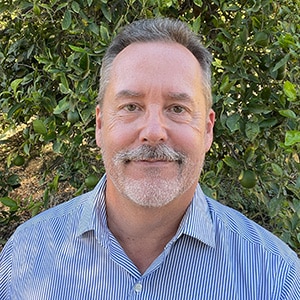
Craig Chalquist, PhD
Craig Chalquist, Ph.D. is program director of Consciousness, Psychology, and Transformation at National University and a former associate provost and several other administrative and leadership roles. His background includes group counseling, depth psychology, mythology, ecopsychology, terrapsychology, and philosophy and wisdom studies. He presents, publishes, and teaches at the intersection of psyche, story, nature, reenchantment, and imagination. He has published more than twenty books, including the hopeful Lamplighter Trilogy. His motto is: “Converse with everything!” Visit Chalquist.com.