Publications

Quiet Reflection in Community: My Residency at Commonweal

Medicine is about the stories of people’s lives. The primary goal of the clinical history is to diagnose and guide treatment. It is less suited to richly describing, complex and often ambiguous stories. Western Medicine is therefore often viewed as a uni-dimensional construct that is dehumanising in its pursuit of diagnosis and treatment. Yet medicine comprises people who grieve, suffer, care for others, and walk with others through pain, suffering, fear, and loss.

What do we lose if we are seduced by this single story of Western Medicine? We lose the opportunity to engage in meaningful dialogue. Author Chimamanda Adichie reminds us that the effect of a single story is to create stereotypes, and the problem with stereotypes is not that they are untrue, but that they are incomplete. We see the failings of our health systems, but we lose sight of its people as allies, collaborators and agents of change. 

We are at a crossroads in medicine. Clinicians are looking for better ways to practise. Clinicians need to listen deeply to communities, patients, and families, but communities also need opportunities to listen to clinicians as people. We all move in and out of roles of healer, helper, witness, patient, carer, and loved one. Acknowledging this shared humanity opens the possibility of dialogue and healing. 

I hoped to use my time at Commonweal to explore ideas for cultivating clinician presence through sharing, deep listening, and quiet reflection in community. During my residency, I experienced presence without a therapeutic goal but for the purpose of enabling new learning. I had the opportunity to connect with people creatively and professionally in a non-clinical context. I appreciated the opportunity to extend my thinking in dialogue with others with a different perspective on healthcare. I experienced a sense of being held; a knowing that people, patients and families, care about their providers, their healers, their doctors.

The problems we face today are complex, requiring the lived experiences and wisdom of many to solve. Healthcare providers face complexity at the interpersonal level and at the systems level. Amidst this complexity, expertise is valued and curiosity is quietly trained out of us. At our July event, Dr. Maria Rosaria Jackson spoke about a crisis of curiosity: We rush to close gaps in our knowledge with quick, plausible explanations, uncomfortable sitting with ambiguity, exploring the unknown with curiosity. The cost is premature closure, unexamined bias, rigid thinking and diminished empathy. 

How do we build the skills to navigate this increasingly complex world? For me, my time at Commonweal was about fostering curiosity and dialogue through the arts. I brought with me, and expanded upon, the Dictionary of Obscure Experiences of Healthcare, a collective narrative document that will allow patients to speak through me to clinicians, and clinicians to speak to patients in return. Art is rich, complex and inherently ambiguous, mirroring the complexity of medicine. The arts can help us build the skills required to navigate the complexity of healthcare. 

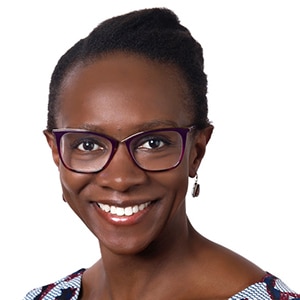
Dr. Catherine Olweny

Catherine is Commonweal New School’s Visiting Scholar in July 2026. She is a consultant paediatric anaesthetist at the Royal Children’s Hospital in Melbourne, Australia, where she has worked since 2009. She has special interest in the prevention and management of procedural anxiety and distress and the prevention of medical trauma. She incorporates hypnosis, Visual Thinking Strategies, the humanities, narrative, and the imagination into her work, which has allowed her to shift the way she teaches language and communication in healthcare contexts.

Catherine studied medicine at Flinders University of South Australia. She was awarded Fellowship of the Australian and New Zealand College of Anaesthetists (ANZCA) in 2009 and Associate Fellowship of the Royal Australasian College of Medical Administrators (RACMA) in 2023. She has a Master of Arts, French Studies, and a Master of Counselling. In 2017 Catherine trained in hypnosis in Paris, eventually completing a diploma in clinical hypnosis at the South Australian Society of Hypnosis in 2018. She has since incorporated hypnosis based advanced communication into her everyday practice as an anaesthetist. She practices as a registered counsellor and clinical hypnotherapist, providing therapy to paediatric patients with chronic pain, anxiety and emotional regulation challenges. She also provides supportive counselling and hypnotherapy to senior medical sta[, international medical graduates, doctors in training and medical students. More recently Catherine trained as a Visual Thinking Strategies (VTS) facilitator and coach. Her interest in VTS stemmed from a search for experiential methods to build clinician tolerance for uncertainty.

Contact Us

Let us know how to get back to you.